



Process Overview
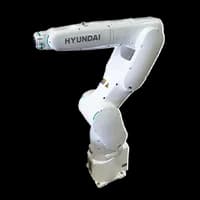
This palletizing automation solution uses the Hyundai Robotics HH050 and Mech-Mind 3D vision to detect mixed-size boxes, align them by size, and automatically stack them onto pallets. By leveraging a cost-effective 3D vision system, the cell can reliably palletize even when cartons of varying dimensions are mixed in the flow, ensuring stable operation.
Components
| Robot | Mech-Mind Mech-Eye Laser L (Industrial 3D camera) FOV: 1250 × 1460 @ 1.5 m; 2500 × 2890 @ 3 m Resolution: 2048 × 1536 (3 MP) Accuracy: 1.0 mm @ 2 m Scan time: 0.9–1.3 s Recommended scanning distance: 1.5–3 m Mech-Viz Intelligent Programming Environment: robot programming tool Hyundai Robotics HDR50-22 (HH050) Repeatability: ±0.06 mm |
|---|---|
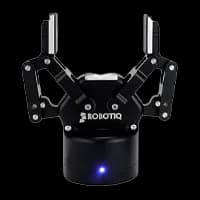
| Peripherals | Tooling Vacuum gripper 3D Vision Mech-Eye Laser L (FOV: 1250 × 1460 @ 1.5 m; 2500 × 2890 @ 3 m, Resolution: 2048 × 1536 (3 MP), Accuracy: 1.0 mm @ 2 m, Scan time: 0.9–1.3 s, Recommended scanning distance: 1.5–3 m, Mech-Viz Intelligent Programming Environment: robot programming tool) Peripheral Equipment Robot base Vision mounting stand Box infeed stand Pallet fixing guide |
Workflow
| STEP 1. | Scan available pallet stacking space using 3D vision |
|---|---|
| STEP 2. | Pick each box and place it into the remaining pallet space based on its size |
| STEP 3. | Repeat until palletizing is complete |
※ The content provided by Bigwave Robotics is protected under U.S. and Canadian copyright and intellectual property laws. Unauthorized reproduction, distribution, or use of this content is strictly prohibited.
Recommended Use Cases

Automated automotive battery palletizing: Safely stack batteries weighing over 60kg with the YASKAWA GP225 💪
This solution automates the repalletizing process for Atlas batteries produced by Hankook & Company for export. Due to the diverse import pallet specifications, customer-specific palletizing patterns, and product types, the total number of possible scenarios exceeds 200. The goal is to standardize these scenarios and ensure line stability by supporting a throughput of 10 pallets per minute for medium-sized batteries and 6 pallets per minute for large-sized batteries. [Pallet Feeder & Pallet Conveyor] This solution allows for the use of up to five different pallet types per country, ensuring a smooth 10-stack logistics cycle. Destacked pallets are transported to the battery palletizing position and aligned simultaneously. Completed pallets are transported to the discharge position. [Battery Sorter] Batteries fed inline are automatically sorted into 1st, 2nd (series/parallel), and 3rd layers according to the preset palletizing pattern. The robot then discharges the batteries, repeating the initialization process. [Robot Palletizer] Once aligned, the batteries are picked and placed at the palletizing position on the conveyor, repeating the pick-and-place process according to the specified location and number of layers. Honeycomb feeds are automatically inserted into each layer according to the settings. [Honeycomb Feeder & Sorter] Automatically sorts and inserts honeycombs into each layer of NO-BOX batteries.
Indoor Logistics Transport and Loading Using VisionNav VNPA15🏗️
Process Overview This case study showcases a logistics automation solution that uses VisionNav's VNPA15 autonomous mobile robot (AMR) to automate the transport and loading/stacking of packaged products in indoor material-handling operations. Built on robust safety functions, the solution minimizes changes to existing workflows while enabling unattended load/unload tasks, and provides effective monitoring and control of real-time operations.

Revealing a Success Story of Warehouse Automation at a Japanese Fashion Company 😎 (Case Study: 181 HIK AMR Logistics Introduced)
A famous Japanese fashion company has adopted HIK robot solutions to optimize clothing Logistics processes in a large-scale warehouse of over 11,000 m². The Shelf-to-Person (STP) system, combining 181 Autonomous Mobile Robots ( AMR) and 26 workstations, is transforming the warehouse into a smart Logistics center and providing productivity that meets the latest trends in the clothing industry.
Process Overview
This palletizing automation solution uses the Hyundai Robotics HH050 and Mech-Mind 3D vision to detect mixed-size boxes, align them by size, and automatically stack them onto pallets. By leveraging a cost-effective 3D vision system, the cell can reliably palletize even when cartons of varying dimensions are mixed in the flow, ensuring stable operation.
Components
| Robot | Mech-Mind Mech-Eye Laser L (Industrial 3D camera) FOV: 1250 × 1460 @ 1.5 m; 2500 × 2890 @ 3 m Resolution: 2048 × 1536 (3 MP) Accuracy: 1.0 mm @ 2 m Scan time: 0.9–1.3 s Recommended scanning distance: 1.5–3 m Mech-Viz Intelligent Programming Environment: robot programming tool Hyundai Robotics HDR50-22 (HH050) Repeatability: ±0.06 mm |
|---|---|
| Peripherals | Tooling Vacuum gripper 3D Vision Mech-Eye Laser L (FOV: 1250 × 1460 @ 1.5 m; 2500 × 2890 @ 3 m, Resolution: 2048 × 1536 (3 MP), Accuracy: 1.0 mm @ 2 m, Scan time: 0.9–1.3 s, Recommended scanning distance: 1.5–3 m, Mech-Viz Intelligent Programming Environment: robot programming tool) Peripheral Equipment Robot base Vision mounting stand Box infeed stand Pallet fixing guide |
Workflow
| STEP 1. | Scan available pallet stacking space using 3D vision |
|---|---|
| STEP 2. | Pick each box and place it into the remaining pallet space based on its size |
| STEP 3. | Repeat until palletizing is complete |
※ The content provided by Bigwave Robotics is protected under U.S. and Canadian copyright and intellectual property laws. Unauthorized reproduction, distribution, or use of this content is strictly prohibited.
Related Use Cases
Automated automotive battery palletizing: Safely stack batteries weighing over 60kg with the YASKAWA GP225 💪
Indoor Logistics Transport and Loading Using VisionNav VNPA15🏗️