


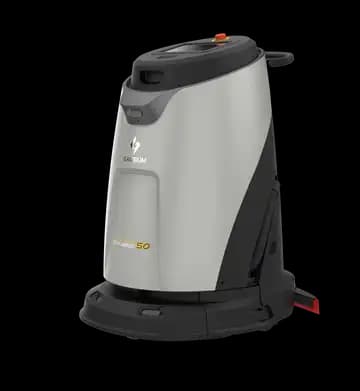

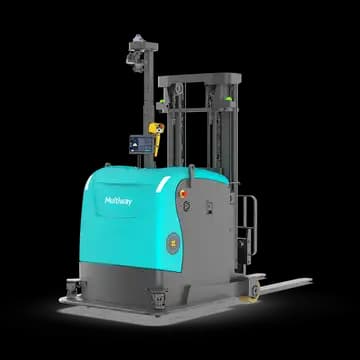
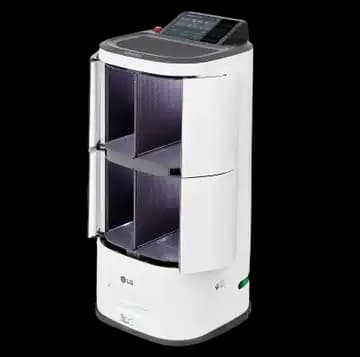

Curious about the robots deployed?
![[업계 최저가] YASKAWA GP225 (Payload : 225kg, Reach : 3393mm)](/_next/image?url=https%3A%2F%2Fmarosol-bucket-dev.s3.amazonaws.com%2Fproduct%2Fthumbnail%2FGP225.png&w=256&q=75)
This solution is an example of automating the repalletizing process for the export of Atlas batteries produced by Korea & Company. Since there are various import pallet specifications by country, palletizing patterns specified by customers, and product types, the total number of possibilities exceeds 200. We aim to ensure line stability by standardizing these and handling volumes of 10/min for medium-sized and 6/min for large-sized products.
[Pallet Feeder & Pallet Conveyor]
More than 5 types of pallets per country can be used in common, ensuring a smooth Logistics cycle for 10 stacks, destacked pallets are transferred to the battery palletizing position and aligned simultaneously, and completed pallets are transferred to the discharge position.
[Battery Aligner]
The process of automatically aligning batteries fed in-line into 1st, 2nd (series/parallel), and 3rd tiers according to the set palletizing pattern, ejecting them via a robot, and then resetting is repeated.
[Robot Palletizer]
The pick-and-place operation of aligned batteries is repeated at the palletizing positions on the conveyor side according to the specified locations and number of layers, and honeycomb is automatically fed layer by layer depending on the settings.
[Honeycomb Feeder & Aligner]
Automatic alignment and insertion of honeycomb layers for each layer of NO-BOX specification batteries
Components
| Robot | Yaskawa GP225 |
|---|
Workflow
| STEP 1. | Pallet Feeder & Pallet Conveyor |
|---|---|
| STEP 2. | Battery Aligner |
| STEP 3. | Robotic Palletizer |
| STEP 4. | Honeycomb Feeding & Alignment |
※ The content provided by Bigwave Robotics is protected under U.S. and Canadian copyright and intellectual property laws. Unauthorized reproduction, distribution, or use of this content is strictly prohibited.
Recommended Use Cases

Automated Electric Vehicle Console Assembly with EPSON SCARA Robots! 🦾
Process Overview Bigwave Robotics (Marosol) established an automated assembly line for console parts for Kia Motors' newly launched SUV-type electric vehicle. The existing console assembly line is a large-scale assembly line, requiring an average of 40-60 workers to assemble manually. The lack of automation experience presented challenges in securing space and recruiting assembly workers. Frequent staff turnover and resulting skill level issues hindered productivity. To address this, the company replaced some workers with robots, addressing the labor shortage and consistently ensuring productivity by adapting to the changing workforce. Warranty Period 1 Year Performance Year 2024 Project Duration 4 Months Project Background and Objectives Building a multi-product automated production line and reducing labor costs through robotic automation Preventing mis-assembly and mis-assembly using a lot-of-lot system and ensuring traceability Remote control and integrated management using SOLlink
Pharmaceutical Box Palletizing Using the Hyundai Robotics YS080L 💊
Process Overview This solution is a packaging process that uses the Hyundai Robotics YS080L to palletize pharmaceutical cartons onto pallets and perform wrapping (stretch wrapping). As an optimized turnkey packaging solution delivered by KT, it can be deployed with a low initial implementation cost, and by integrating with KT's smart-factory platform Factory Makers, you can introduce a smart-factory system alongside the automation cell. Through this solution, automated palletizing of heavy beverage cartons improved handling speed/throughput and helped prevent operator musculoskeletal disorders (MSDs).
YASKAWA Industrial Robot Hanger-Box Palletizing Automation
Process Overview This deployment uses a YASKAWA GP180 to palletize boxes of hanger products weighing over 20 kg onto pallets. By replacing manual handling in heavy-payload work, it helps prevent musculoskeletal disorders and enables faster, more consistent palletizing performance. Note: Cost may vary depending on the installation environment, robot brand, and payload requirements.
This solution is an example of automating the repalletizing process for the export of Atlas batteries produced by Korea & Company. Since there are various import pallet specifications by country, palletizing patterns specified by customers, and product types, the total number of possibilities exceeds 200. We aim to ensure line stability by standardizing these and handling volumes of 10/min for medium-sized and 6/min for large-sized products.
[Pallet Feeder & Pallet Conveyor]
More than 5 types of pallets per country can be used in common, ensuring a smooth Logistics cycle for 10 stacks, destacked pallets are transferred to the battery palletizing position and aligned simultaneously, and completed pallets are transferred to the discharge position.
[Battery Aligner]
The process of automatically aligning batteries fed in-line into 1st, 2nd (series/parallel), and 3rd tiers according to the set palletizing pattern, ejecting them via a robot, and then resetting is repeated.
[Robot Palletizer]
The pick-and-place operation of aligned batteries is repeated at the palletizing positions on the conveyor side according to the specified locations and number of layers, and honeycomb is automatically fed layer by layer depending on the settings.
[Honeycomb Feeder & Aligner]
Automatic alignment and insertion of honeycomb layers for each layer of NO-BOX specification batteries
Components
| Robot | Yaskawa GP225 |
|---|
Workflow
| STEP 1. | Pallet Feeder & Pallet Conveyor |
|---|---|
| STEP 2. | Battery Aligner |
| STEP 3. | Robotic Palletizer |
| STEP 4. | Honeycomb Feeding & Alignment |
※ The content provided by Bigwave Robotics is protected under U.S. and Canadian copyright and intellectual property laws. Unauthorized reproduction, distribution, or use of this content is strictly prohibited.
Curious about the robots deployed?
Related Use Cases