





How to receive Humanoid technical support (teleoporation/imitation/reinforcement learning/MPC)
2 min read0212
Humanoid Teleoperation/Imitation·Reinforcement Learning/MPC:
How to receive not only implementation but also technical support
💡 We'll tell you all this in 5 minutes!
Imitation/Reinforcement Learning + VR Teleoperation Flow Attracting Attention at KRoC
Teleoperation-based data collection → Imitation learning → Reinforcement learning process
How to run training and validation in the Isaac Sim (Isaac Lab) test
How to even get “technical support” at the Marosol Humanoid Special Exhibition
Changes in the ' Humanoid Learning Pipeline' shown in KRoC
Big Wave Robotics (Marosol), a company specializing in robot automation, held at the Alpensia Convention Center in Pyeongchang, Gangwon-do from February 4 to 7. Korea Robotics Institute (KRoC) I participated in.
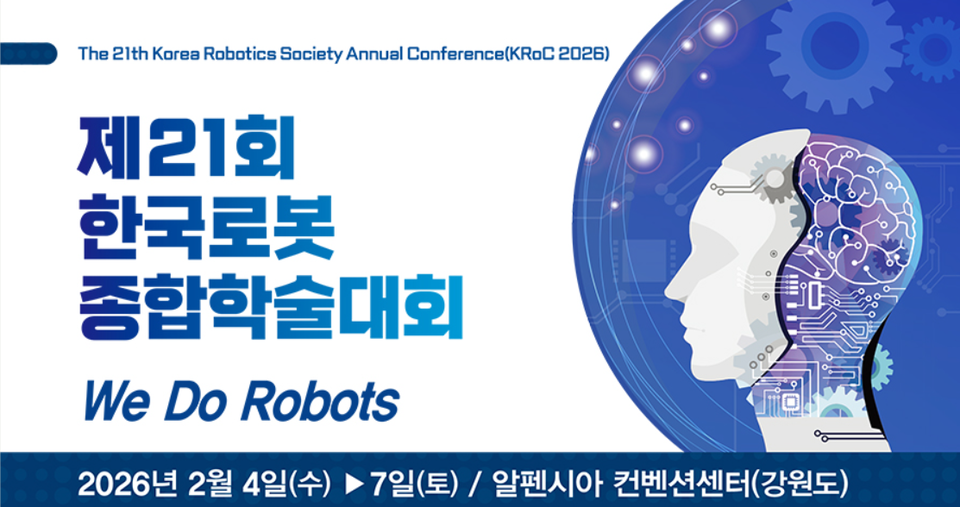
At this exhibition, Big Wave Robotics showcased what is essential for Humanoid robot Research: Remote operation (Teleoperation) → Data collection → Learning (Imitation/Reinforcement) → Simulation verification, directly demonstrating the full-cycle research environment on-site.
There was particularly great interest from academia and researchers that it did not simply “exhibit robots,” but also presented learning infrastructure and operational know-how that could be immediately utilized in laboratories.
So today, we’ve gathered the questions frequently asked at the KRoC site by researchers, undergraduates, professors, and visitors from actual industry settings who are considering the adoption of humanoid and research robots, and prepared content in a Q&A format with answers from experts at Big Wave Robotics (Marosol)! 😎
How Humanoid Learn, Where They Are Validated, and How This Leads to Adoption
If you follow along to the end, the specific points of your inquiry will become much clearer. 🙂
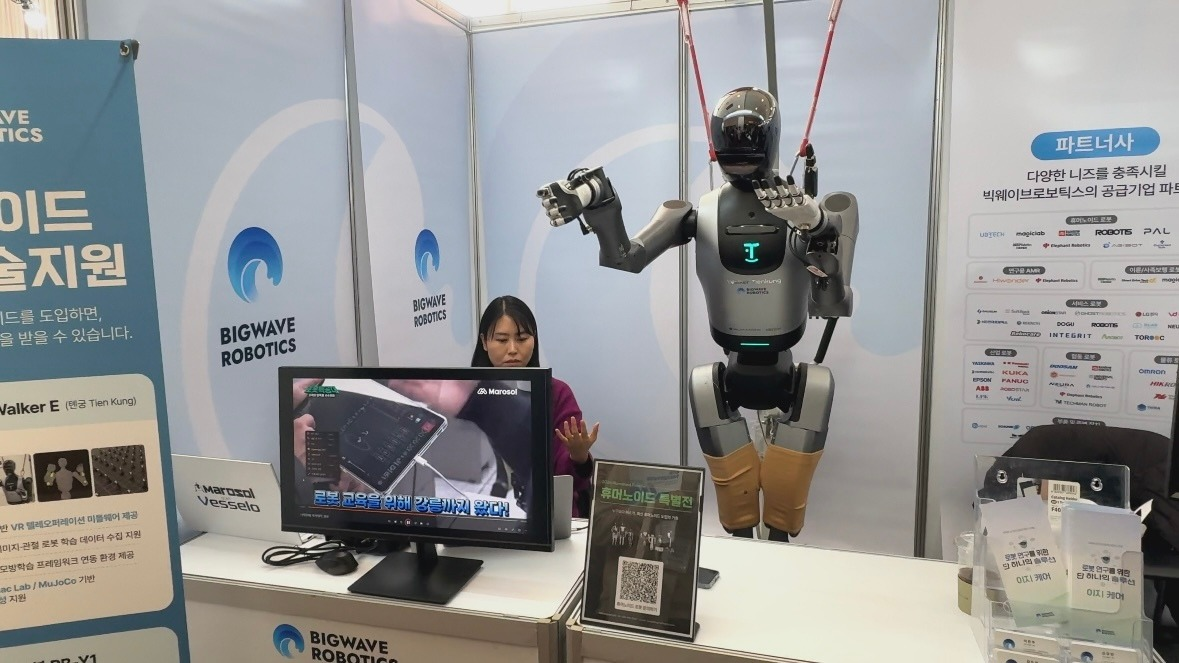
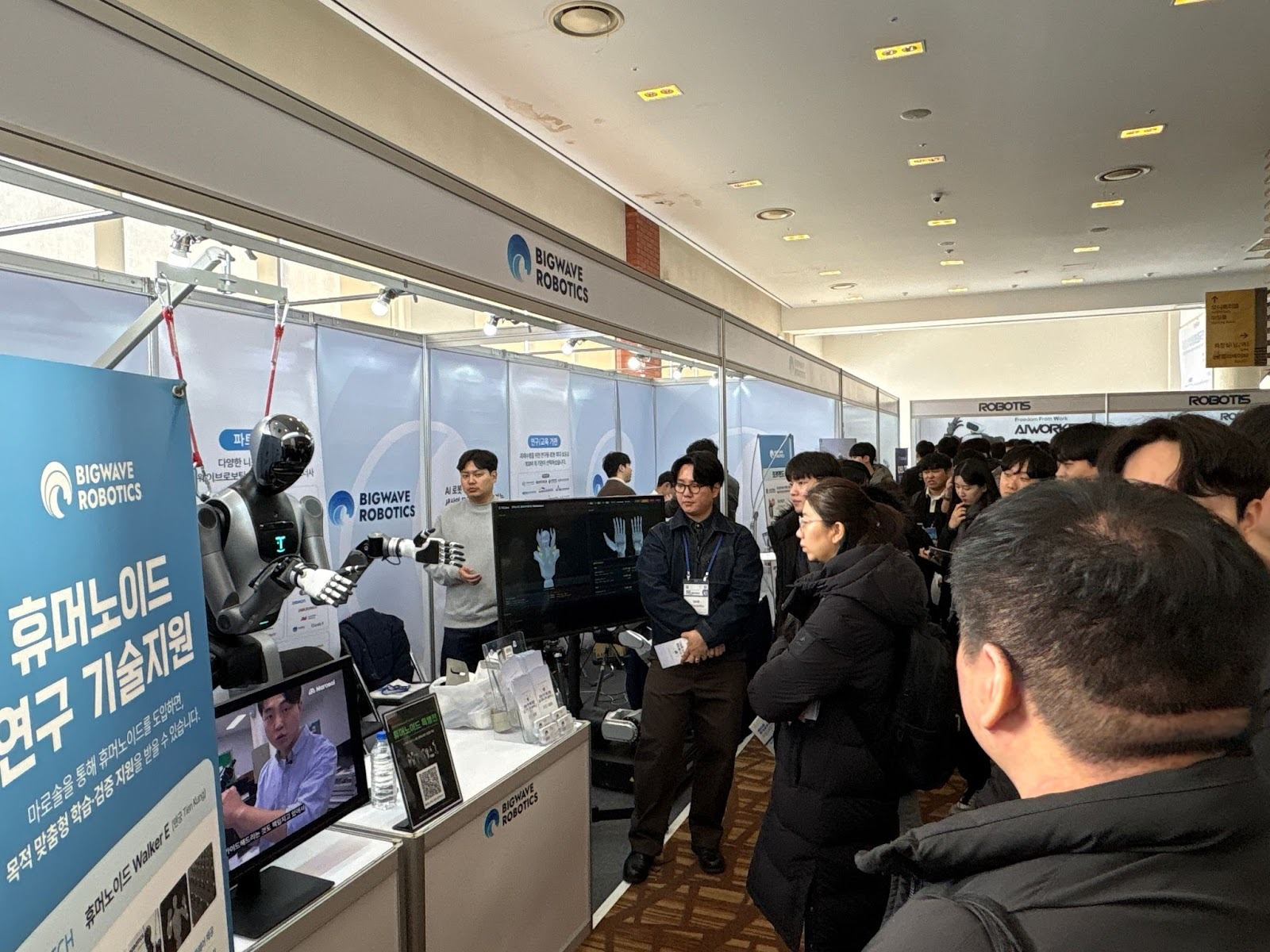 The participation booth set up by Big Wave Robotics at KRoC (Korea Robotics Conference).
Q1. Hello, Doyeon. At this KRoC expo, what do researchers and stakeholders need most when introducing Humanoid ?
The question that was overwhelmingly frequent on-site was... “How much technical support can I receive?”
In particular, what the researchers, professors, students, and field practitioners who visited KRoC all felt in common was that a humanoid robot is not just a piece of equipment that is finished once purchased and installed.
Even after deployment, a humanoid requires a continuous 'R&D pipeline'—including remote control (teleoperation) environment setup, data collection, imitation/reinforcement learning, and simulation-based verification via tools like Isaac Sim. Only by maintaining this cycle can the robot achieve performance improvements and transition into stable, real-world operations.
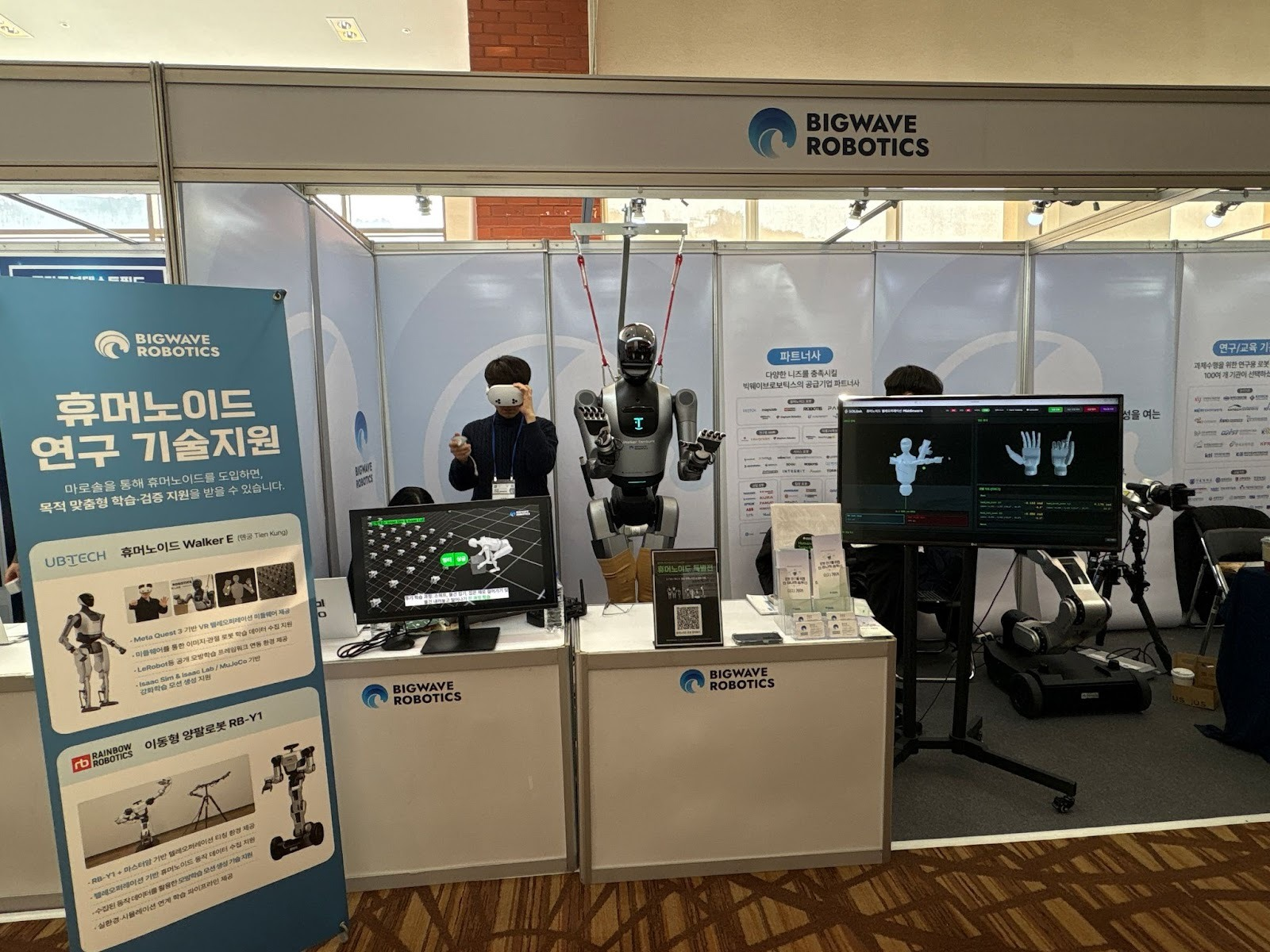 The Big Wave Robotics development team setting up a teleoperation environment at the KRoC expo.
Q2. What exactly are imitation learning, reinforcement learning, and MPC?
That is a good question. In fact, when many people hear the term "technical support," they simply think of repairing a robot when it breaks down. However, the technical support referred to in humanoid is a much broader concept than that.
Unlike industrial robots, humanoids are not structured to end with just teaching; Learning and control technologies must be combined. It is because it is a robot that can move stably in the actual field.
Simply put, humanoid tech support refers to supporting the “entire process, from creating the brain that allows the robot to move to ensuring stable control so it doesn't fall over.”
It is helpful to understand this by dividing it into three main categories.
1) Imitation Learning (IL)
Imitation learning is literally “a method of learning where a robot follows a human demonstration.”
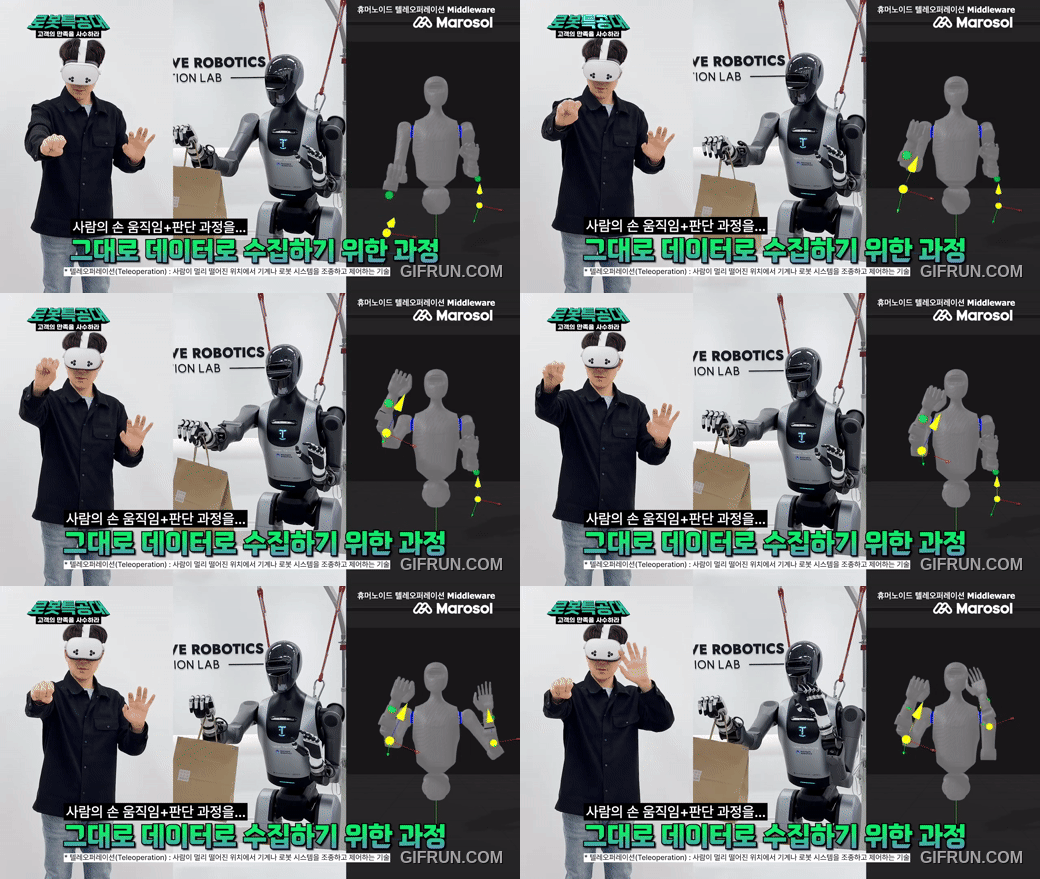
For example, if a person directly operates a Humanoid using VR teleoperation, the robot, in that process Camera field of view (visual information), joint movements (angle, speed), hand movements and force control, work sequence (action sequence) You will accumulate the same data.
The data collected in this way eventually becomes an “example answer” from the robot’s perspective, and The robot learns that and independently generates similar behaviors in similar situations. You will be able to do it.
In other words, you can view imitation learning as a technology that establishes a starting point (baseline) enabling a Humanoid to do something from the very beginning.
2) Reinforcement Learning (RL)
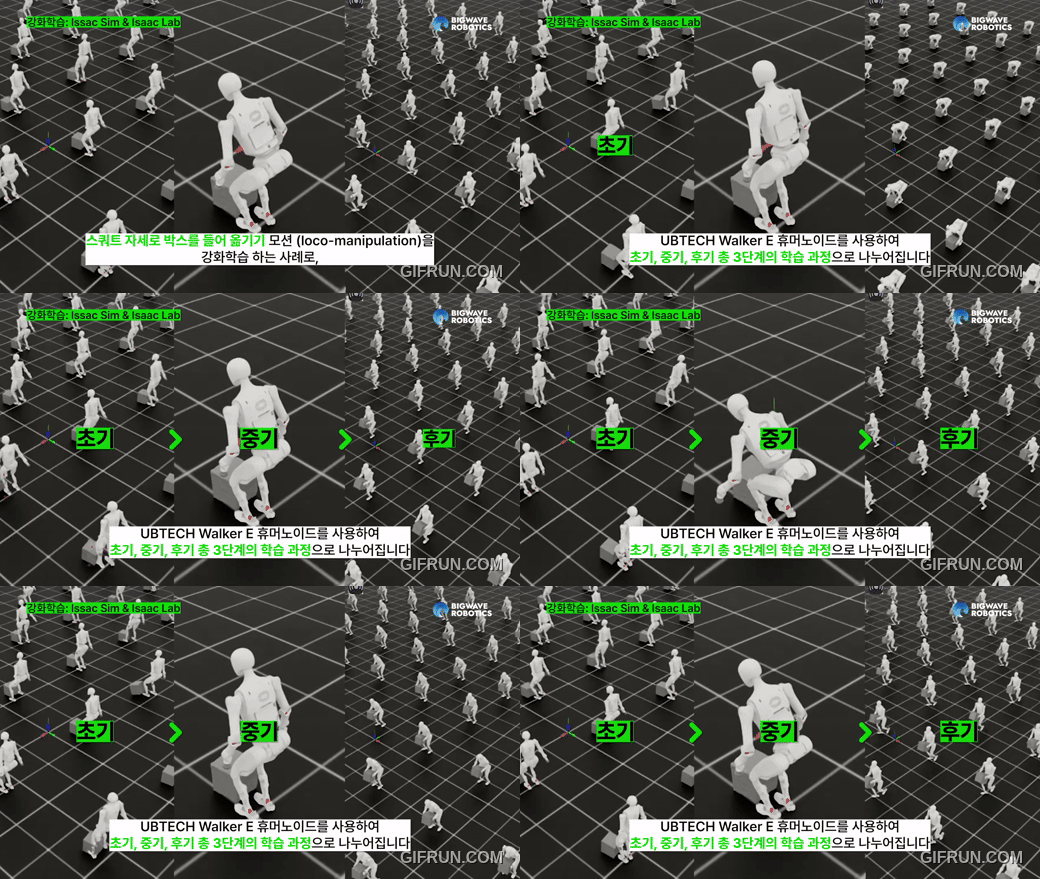
Reinforcement learning is not a “method where humans provide the correct answer,” but, A method of making robots improve by repeating trial and error on their own no see.
For example, when performing the task of "grabbing an object," if you set the rewards such as +1 point for catching, -1 point for dropping, and +10 points for moving it to the target location, the robot will gradually increase its success rate through thousands to tens of thousands of simulation iterations.
Because Humanoid have particularly many variables, it is difficult to teach them perfectly from the start or to rely solely on imitation learning, and Through reinforcement learning, robust policies that remain unshaken by environmental changes must be created to enable actual field deployment. It becomes.
Therefore, in practice, the most commonly used approach is to quickly build basic operations using Imitation Learning (IL) and improve performance and stability using Reinforcement Learning (RL).
3) MPC (Model Predictive Control)
MPC is a slightly different area from learning.
This is the control technology required for a Humanoid to move “without falling over.”
A Humanoid is not a robot that moves only its arms; it must balance with its legs while simultaneously performing tasks with its hands. Therefore, if it simply executes learned movements, it may wobble or fall over due to unexpected variables.
Simply put, MPC is a method in which a robot predicts its movements over the next few seconds based on its current state and selects the most stable move among them. no see.
In other words, it is a technology that enables robots to move while calculating the future, rather than reacting "spontaneously." In robots where balance is important, such as Humanoid, MPC plays a crucial role in enhancing the stability of actual movements.
Q3. Then, to what extent does Marosol actually provide technical support?
A. The technical support we refer to is not merely “support for resolving issues when the robot does not move,” but also includes designing and operating the ‘entire post-introduction pipeline’ to ensure that the Humanoid can actually learn and be verified in both the laboratory and the field.
For Humanoid, the success of implementation is determined not by the robot itself, but by how quickly the learning environment and operational structure are established. Therefore, Marosol provides practical support through the next stages of the Humanoid implementation process.
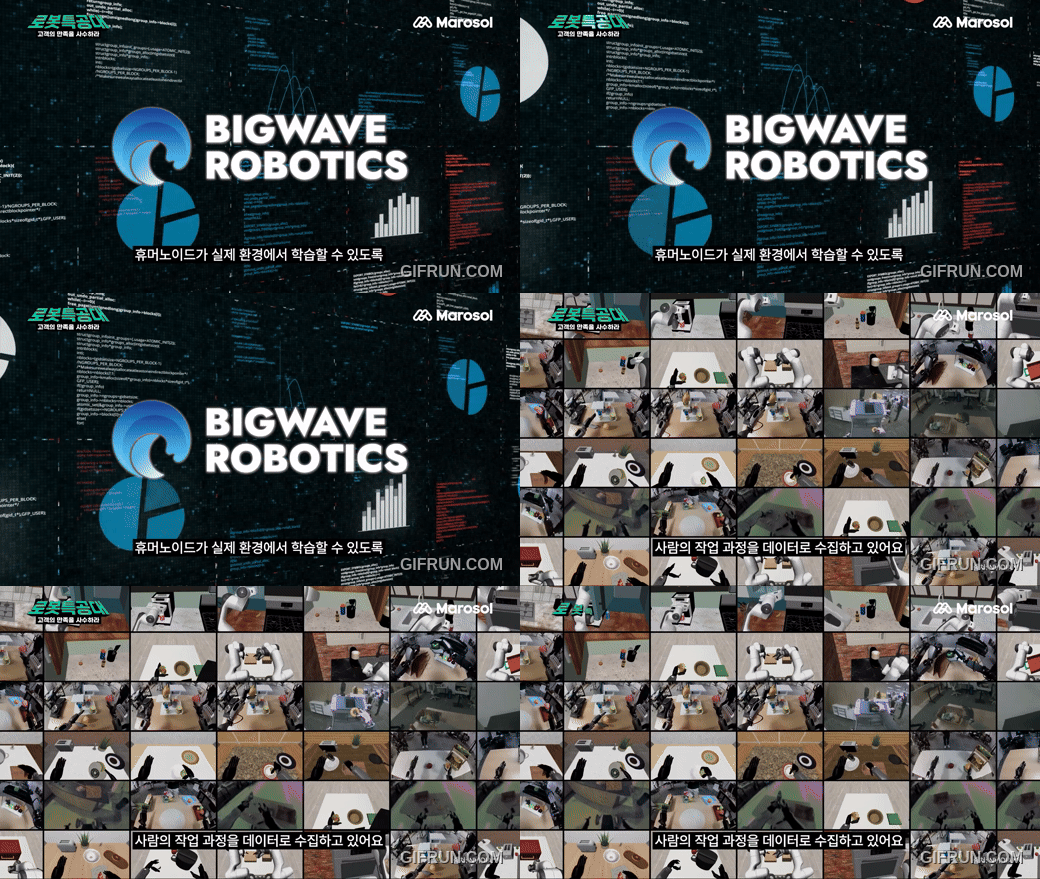
1) Support for establishing a tele-operation (VR remote control) environment
The first bottleneck in Humanoid Research is “how to collect data.” Therefore, we provide a structure that allows for the intuitive control of Humanoid through a VR-based teleoperation environment, enabling the natural accumulation of training data in the process.
In other words, it is a method that supports researchers in creating demonstration data and starting experiments immediately without having to develop a complex remote operation environment from scratch.
The data collected during this process is designed not as simple images, but to be organized into a “form ready for learning” such as visual information (camera/depth, etc.), joint movements (full body joint trajectory), hand/gripper movements, and action sequences (workflow).
2) Support for Imitation Learning (IL) and Reinforcement Learning (RL) learning pipelines
Data acquired through VR teleoperation is immediately utilized for imitation learning (IL), creating a baseline that allows the Humanoid to quickly learn basic movements from the very beginning. At this point, we Configure the learning environment with a structure capable of integrating with open-source frameworks such as LeRobot and ROS2. It supports an open pipeline that is not tied to a specific vendor or robot environment. Thanks to this, Research institutions can naturally expand Humanoid Research without discarding their existing data, code, and experimental assets.
Furthermore, based on the basic movements created with IL, we enhance the performance and stability required for actual field deployment through reinforcement learning (RL). Since Humanoid involve many real-world variables that can cause success rates to fluctuate if they rely solely on "imitation," we support the optimization of empirical elements during the RL phase to align with Research objectives. These elements include robustness for gripping objects even when their positions change, maintaining balance, improving the success rate of repetitive tasks, and responding to environmental changes.
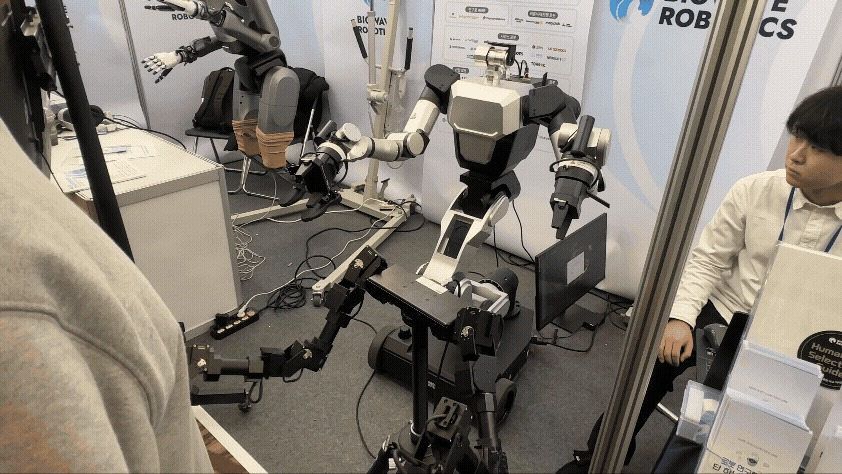 Visitors experiencing teleoperation with the Rainbow Robotics Humanoid RBY-1 at the KRoC expo
4) Support for simulation verification based on Isaac Sim / Isaac Lab / MuJoCo
And one of the most important parts is simulation verification.
For Humanoid, repeating learning directly on actual robots is costly and carries high risks such as falling and collisions.
Therefore, we support the performance of motion generation and pre-validation, including reinforcement learning, based on simulation environments such as Isaac Sim, Isaac Lab, and MuJoCo.
Through this process, Research institutions can gain advantages such as ensuring experimental stability, improving the efficiency of repetitive testing, and increasing the success rate of actual robot applications. Ultimately, this changes the speed of the Research itself.
5) Integrated support extending from implementation to operation (EasyCare)
Finally, Humanoid are meaningful only if they extend beyond the laboratory to the actual operation and demonstration phases.
Therefore, instead of simple technical support, we provide assistance in the form of EasyCare, which integrates robot introduction consulting, Research environment setup, demonstration operation support, technology maintenance, and the provision of equipment operation know-how into a single workflow.
Ultimately, from the perspective of Research institutions, this significantly reduces the “burden of having to solve problems alone after purchasing a robot,” allowing them to focus on the Research itself.
To summarize, Marosol's technical support is “from implementation to success.”
Humanoid are now closer to “buying a robot” than to “introducing a learning pipeline together.”
So, we at Marosol (Big Wave Robotics)
It has a structure that can actually support the entire flow of VR teleoperation → data collection → imitation learning (IL) → reinforcement learning (RL) → simulation verification → MPC-based stabilization → actual robot application and operation.
For this reason, it seems that at the KRoC site, the most frequently asked question was “how much technical support can be received” rather than the robot model.
Q5. Why do you say that 'operation' is more important than 'purchase' for Humanoid?
Humanoid are actually more difficult to “operate” than to “purchase.”
Even if you have completed training using Imitation Learning (IL) and Reinforcement Learning (RL) and finished verification in simulations, when you enter the actual field, there is ultimately only one question left.
"Can our organization operate this robot continuously and stably?" no see.
Therefore, Big Wave Robotics (Marosol) operates an Innovation Lab for Humanoid demonstration, and is building a demonstration structure that not only enhances learning performance but also connects to actual Industry site operations.
In addition, Big Wave Robotics (Marosol) The core of Humanoid operation is ultimately integrated control and orchestration Based on this, we are continuously advancing SOLlink, a cloud-based integrated control system that enables the integrated operation of various types of robots on a single screen.
Eventually, there comes a moment in the field where the research team handles the learning, while the field handles the operation.
If there is no structure to connect the trained robot so that it operates naturally within the actual business system, the success rate of implementation is bound to drop sharply.
Therefore, designing everything from Humanoid implementation to operational control together is becoming an increasingly important standard.
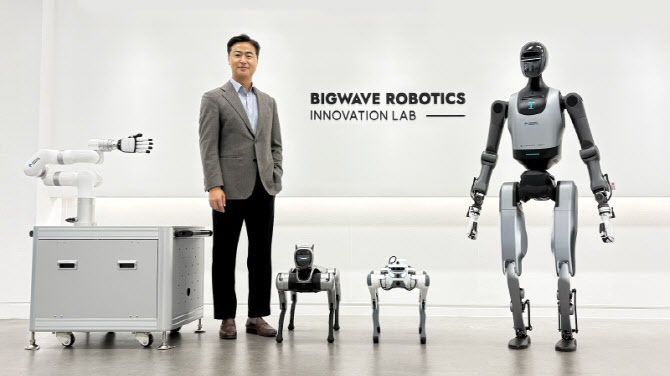 Kim Min-kyo, CEO of Big Wave Robotics, standing with major research robots, including Humanoid robots, at the Innovation Lab.
Connect inquiries to the Marosol Humanoid Special Exhibition in 'Introduction'
If you understand the technology, there is only one next step.
Establishing a 'short' route for introducing Humanoid that suits our organization.
The Marosol Humanoid Special Exhibition is not just a simple exhibition Guide,
Comparison of introduction-type Humanoid lineups → Shortening of introduction schedule → Support for demonstration and operation This is a special exhibition designed to allow you to consult on everything at once.
✅ Key Benefits of the Special Exhibition (Summary)
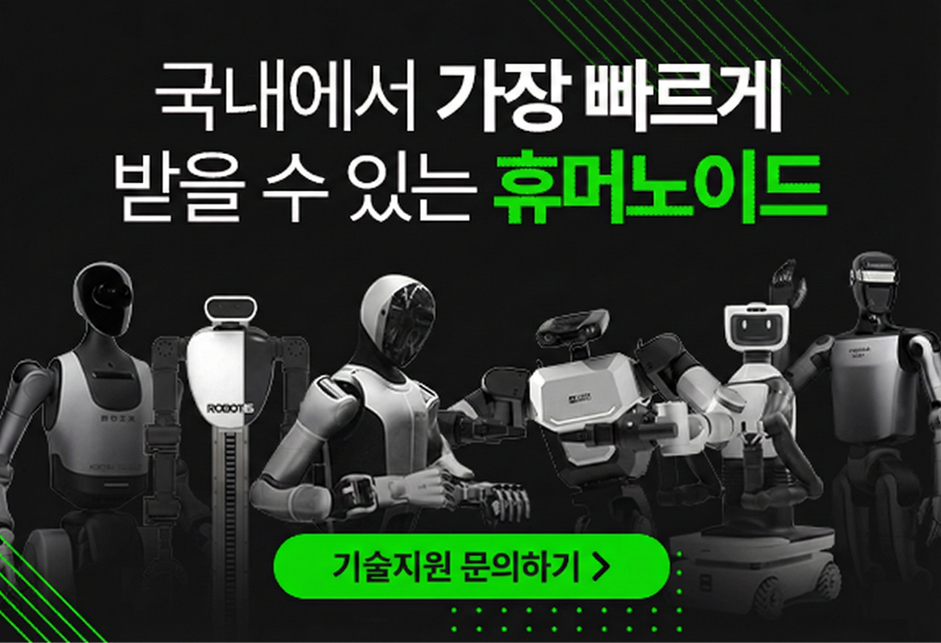
Korea's largest lineup : Over 10 types of global and domestic Humanoid for actual deployment
Average implementation period: 3 months : More than half the time can be saved by booking in advance
Humanoid PhD-level Research Support Team Integrated support from design and demonstration to operation
Research, Industry, and educational institutions Provides customized implementation packages
👇 If even one of the questions below came to mind
Now is the fastest time to receive the implementation roadmap.
"Could I get comparative quotes for a robot suitable for Research?"
"Could we also start by building up data with VR teleoperation?"
"Can we verify our task at Isaac Sim first?"
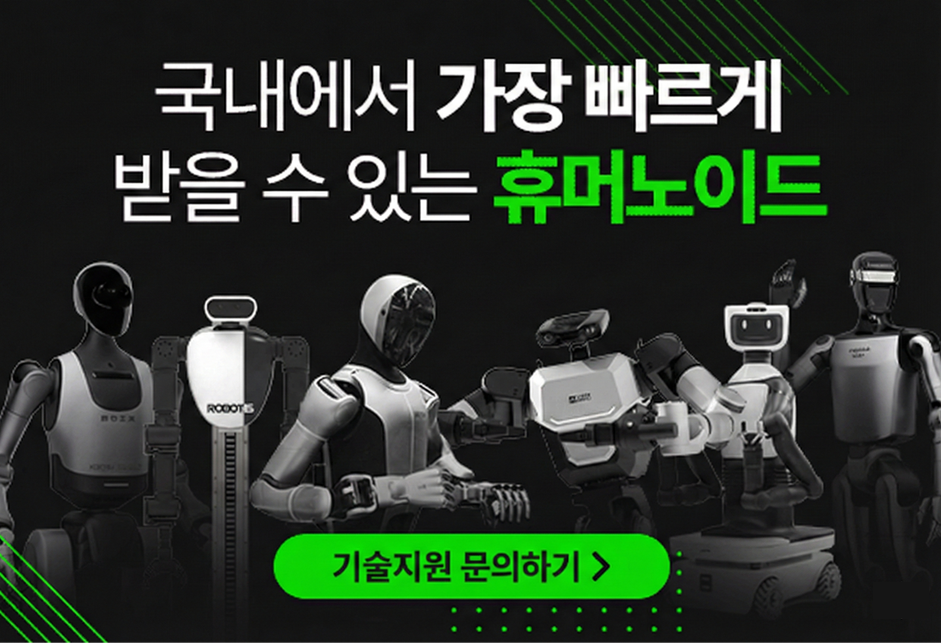
If any of these apply to you, the fastest and most reliable approach is to first receive an 'Introduction Roadmap' during the special exhibition consultation, based on the target tasks, schedule, budget, and scope of demonstration. Please click the button below to leave a brief inquiry, and a robot expert from Big Wave Robotics will respond promptly. Thank you! 👇
Readers also liked the following posts

The Smart Way to Adopt Research Robots! (ft. Rainbow Robotics RB3-730 Teaching Support)
Are Medication Delivery Robots Really Worth It? 🤔 A Review of Hospital Delivery Robots

How to receive Humanoid technical support (teleoporation/imitation/reinforcement learning/MPC)
Is this the cleaning power of a commercial robot vacuum cleaner? 😮 A review of the 12 industrial robot vacuum cleaners deployed at Incheon Airport
Price Negotiation Available Now!
Additional discounts may be available depending on your needs.