




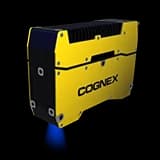
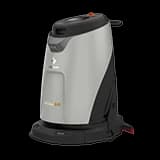
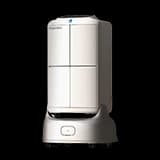
Curious about the robots deployed?
Process Overview
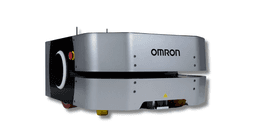
This case study features a large, cylindrical raw-material transport solution using OMRON AMRs. Previously, raw-material transport was handled manually, with operators physically rolling large cylindrical containers to move them. Due to operator fatigue and low handling efficiency in this workflow, an automation solution became necessary.
In this project, OMRON AMRs were introduced to automate raw-material transport, with the goal of reducing operator burden and significantly improving material-handling efficiency.
Project Background and Objectives
When raw materials arrived inbound in large containers, the manual transport process required high physical effort and carried a risk of injury. In addition, time loss and workload imbalance led to reduced productivity.
The objective of this project is to address these issues by deploying an AMR-based automation solution and realizing more efficient internal logistics operations.
Components
| Robot | OMRON AMR logistics robot: An AMR solution suitable for high-payload raw-material transport, maximizing stability and operational efficiency. |
|---|---|
| Peripherals | U-shaped top module: A custom U-shaped top module mounted on the AMR to securely carry and transport cylindrical loads, enabling safe and stable transport operations. |
Workflow
| STEP 1. | The AMR docks with inbound raw materials, safely loads them onto the U-shaped top module, and initiates transport |
|---|---|
| STEP 2. | Through AMR–automatic door integration, it passes through high-speed doors smoothly without manual operation |
| STEP 3. | The AMR interfaces with the elevator system to perform inter-floor transport |
| STEP 4. | The AMR safely places raw materials at the designated drop-off location. |
※ The content provided by Bigwave Robotics is protected under U.S. and Canadian copyright and intellectual property laws. Unauthorized reproduction, distribution, or use of this content is strictly prohibited.
Recommended Use Cases
Yuhan-Kimberly’s Choice: Fully Automated Depalletizing + Strap Cutting📦
Process Overview This deployment was implemented at Yuhan-Kimberly's Chungju Plant, delivering an integrated solution that combines a Yaskawa industrial robot with a strapping-cut workbench to automate depalletizing + strap cutting. The customer pursued a depalletizing system to reduce labor costs and operator fatigue, and showed strong interest in automating strap cutting and strap discharge to further maximize cost savings and operational efficiency. The solution handles mixed carton sizes by aligning (squaring) cartons, cutting and removing straps, and then feeding cartons into the case packer. This improves throughput and consistency in both carton infeed and strap removal, while reducing physical strain on operators and enhancing workplace safety. Project Background and Objectives At Yuhan-Kimberly's Chungju Plant, cartons arriving on pallets were previously broken down manually and then loaded one-by-one into the case packer. The work was highly repetitive, and manual strap removal using knives created a persistent risk of safety incidents. The objective of this project was to minimize reliance on manual labor by automating the entire process—from depalletizing through case packer infeed—and to achieve lights-out (unmanned) operation for strap cutting. This enables improved operator safety, reduced fatigue and staffing burden on the floor, and more stable, repeatable plant operations.

Automated automotive battery palletizing: Safely stack batteries weighing over 60kg with the YASKAWA GP225 💪
This solution automates the repalletizing process for Atlas batteries produced by Hankook & Company for export. Due to the diverse import pallet specifications, customer-specific palletizing patterns, and product types, the total number of possible scenarios exceeds 200. The goal is to standardize these scenarios and ensure line stability by supporting a throughput of 10 pallets per minute for medium-sized batteries and 6 pallets per minute for large-sized batteries. [Pallet Feeder & Pallet Conveyor] This solution allows for the use of up to five different pallet types per country, ensuring a smooth 10-stack logistics cycle. Destacked pallets are transported to the battery palletizing position and aligned simultaneously. Completed pallets are transported to the discharge position. [Battery Sorter] Batteries fed inline are automatically sorted into 1st, 2nd (series/parallel), and 3rd layers according to the preset palletizing pattern. The robot then discharges the batteries, repeating the initialization process. [Robot Palletizer] Once aligned, the batteries are picked and placed at the palletizing position on the conveyor, repeating the pick-and-place process according to the specified location and number of layers. Honeycomb feeds are automatically inserted into each layer according to the settings. [Honeycomb Feeder & Sorter] Automatically sorts and inserts honeycombs into each layer of NO-BOX batteries.

AMR logistics robots introduced to manufacturing factory ✨ Logistics automation that quickly resolves even 1 ton of waste drbris (2 KUKA KMP 1500P logistics robots)
Process Overview This case study demonstrates the installation of a KUKA KMP 1500P logistics robot at Bigwave Robotics (Marosol) to transport rollers and scrap debris within the space manufacturing facility. The KMP 1500P autonomously handles up to 1 ton of scrap debris over a 1.2 km distance and automatically transports heavy-duty roller modules weighing up to 1 ton. Furthermore, sensors embedded in the KMP 1500P enabled the development of an unmanned system capable of safely transporting heavy-duty materials. Project Background and Purpose Automated unmanned transport using autonomous robots Robots perform simple, repetitive tasks Safe operation of heavy-duty products using various sensors Remote control and monitoring using SOLlink
Process Overview
This case study features a large, cylindrical raw-material transport solution using OMRON AMRs. Previously, raw-material transport was handled manually, with operators physically rolling large cylindrical containers to move them. Due to operator fatigue and low handling efficiency in this workflow, an automation solution became necessary.
In this project, OMRON AMRs were introduced to automate raw-material transport, with the goal of reducing operator burden and significantly improving material-handling efficiency.
Project Background and Objectives
When raw materials arrived inbound in large containers, the manual transport process required high physical effort and carried a risk of injury. In addition, time loss and workload imbalance led to reduced productivity.
The objective of this project is to address these issues by deploying an AMR-based automation solution and realizing more efficient internal logistics operations.
Components
| Robot | OMRON AMR logistics robot: An AMR solution suitable for high-payload raw-material transport, maximizing stability and operational efficiency. |
|---|---|
| Peripherals | U-shaped top module: A custom U-shaped top module mounted on the AMR to securely carry and transport cylindrical loads, enabling safe and stable transport operations. |
Workflow
| STEP 1. | The AMR docks with inbound raw materials, safely loads them onto the U-shaped top module, and initiates transport |
|---|---|
| STEP 2. | Through AMR–automatic door integration, it passes through high-speed doors smoothly without manual operation |
| STEP 3. | The AMR interfaces with the elevator system to perform inter-floor transport |
| STEP 4. | The AMR safely places raw materials at the designated drop-off location. |
※ The content provided by Bigwave Robotics is protected under U.S. and Canadian copyright and intellectual property laws. Unauthorized reproduction, distribution, or use of this content is strictly prohibited.
Curious about the robots deployed?
Related Use Cases
Yuhan-Kimberly’s Choice: Fully Automated Depalletizing + Strap Cutting📦
Automated automotive battery palletizing: Safely stack batteries weighing over 60kg with the YASKAWA GP225 💪