





Process Overview
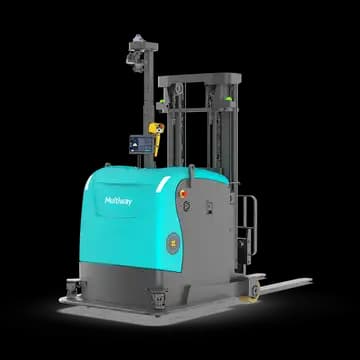
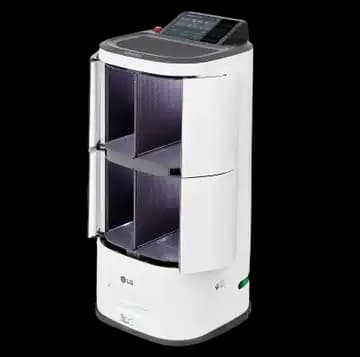
This case study demonstrates the automation of heavy-duty product transport using Omron AMR logistics robots.
The client implemented a logistics automation system to reduce inefficiencies and labor burdens associated with repetitive, heavy logistics tasks. Specifically, they sought to reduce costs and maximize logistics efficiency through automated palletizing and return operations.
This solution automates simple, repetitive tasks like product movement and loading, thereby increasing the efficiency and accuracy of the shipping process and reducing worker burden, thereby enhancing safety and productivity.
Project Background and Objectives
The client recognized the need for automation in heavy cart transport and lead tab return operations and sought to improve logistics operational efficiency and reduce operating costs by introducing AMRs.
This project aimed to:
- Automating lead tab return and cart transport
- Improving worker productivity and ensuring safety
- Enhancing efficiency and flexibility in the logistics field
Components
| Robot | Omron AMR logistics robot LD-90: Moves autonomously while avoiding obstacles, equipped with a two-row conveyor, and loads and returns up to 6 lead tab trays. ; Omron AMR logistics robot LD-250: Equipped with a lift, transports up to 64 lead tab trays by combining with a cart, and moves autonomously to the destination after automatically recognizing the cart. |
|---|---|
| Peripherals | Robot upper module: Customization for tasks is possible, and productivity is increased by automatically processing repetitive tasks. ; Robot station: Loads the cart to be transported by the robot to support stable logistics return. ; Composite inspection machine: Inspects the trays returned by the robot, and automatically detects defective products. ; Buffer conveyor: Loads the trays after inspection, and provides a buffer to help workers load the cart. ; Tray cart: Up to 64 trays can be loaded, and is transported by LD-250. |
Workflow
| STEP 1. | Calling the operator: Click the button → Receive command to move LD-90 → Autonomous driving to the designated location |
|---|---|
| STEP 2. | Tray loading: Manually load trays onto the LD-90 conveyor → Return to the composite inspection machine |
| STEP 3. | Inspection task: Inspector docking → Tray inspection → Buffer conveyor loading after inspection |
| STEP 4. | Cart loading: The worker manually loads the tray onto the cart. |
| STEP 5. | Cart transport: Call LD-250 → Cart automatically recognized and transported |
| STEP 6. | End of work: The robot automatically returns to the waiting area after work. |
※ The content provided by Bigwave Robotics is protected under U.S. and Canadian copyright and intellectual property laws. Unauthorized reproduction, distribution, or use of this content is strictly prohibited.
Recommended Use Cases
Indoor Logistics Transport and Loading Using VisionNav VNPA15🏗️
Process Overview This case study showcases a logistics automation solution that uses VisionNav's VNPA15 autonomous mobile robot (AMR) to automate the transport and loading/stacking of packaged products in indoor material-handling operations. Built on robust safety functions, the solution minimizes changes to existing workflows while enabling unattended load/unload tasks, and provides effective monitoring and control of real-time operations.

Revealing a Success Story of Warehouse Automation at a Japanese Fashion Company 😎 (Case Study: 181 HIK AMR Logistics Introduced)
A famous Japanese fashion company has adopted HIK robot solutions to optimize clothing Logistics processes in a large-scale warehouse of over 11,000 m². The Shelf-to-Person (STP) system, combining 181 Autonomous Mobile Robots ( AMR) and 26 workstations, is transforming the warehouse into a smart Logistics center and providing productivity that meets the latest trends in the clothing industry.

Automating Automotive Battery Palletizing: Safely Stack Batteries Weighing Over 60kg with the Yaskawa GP225 💪
This solution is an example of automating the repalletizing process for the export of Atlas batteries produced by Korea & Company. Due to the diverse import pallet specifications by country, palletizing patterns specified by client, and product varieties, the total number of possible scenarios exceeds 200. The goal is to ensure line stability by standardizing these variables and handling volumes of 10/min for medium-sized pallets and 6/min for large-sized pallets. [Pallet Feeder & Pallet Conveyor] It allows for the common use of more than five types of pallets per country, ensures a smooth Logistics cycle for 10 stacks, transfers disstacking pallets to the battery palletizing position while simultaneously aligning them, and transfers completed pallets to the discharge position. [Battery Aligner] Automatically aligns batteries fed in-line into 1st, 2nd (series/parallel), and 3rd layers according to the set palletizing pattern, then discharges them via a robot and repeats the operation of initialization. [Robot Palletizer] Repeats pick-and-place operations on aligned batteries at palletizing positions on the conveyor side according to designated locations and layers, and automatically feeds honeycomb to each layer according to settings. [Honeycomb Feeder & Aligner] Automatically aligns and feeds honeycomb to each layer of NO-BOX specification batteries.
Process Overview
This case study demonstrates the automation of heavy-duty product transport using Omron AMR logistics robots.
The client implemented a logistics automation system to reduce inefficiencies and labor burdens associated with repetitive, heavy logistics tasks. Specifically, they sought to reduce costs and maximize logistics efficiency through automated palletizing and return operations.
This solution automates simple, repetitive tasks like product movement and loading, thereby increasing the efficiency and accuracy of the shipping process and reducing worker burden, thereby enhancing safety and productivity.
Project Background and Objectives
The client recognized the need for automation in heavy cart transport and lead tab return operations and sought to improve logistics operational efficiency and reduce operating costs by introducing AMRs.
This project aimed to:
- Automating lead tab return and cart transport
- Improving worker productivity and ensuring safety
- Enhancing efficiency and flexibility in the logistics field
Components
| Robot | Omron AMR logistics robot LD-90: Moves autonomously while avoiding obstacles, equipped with a two-row conveyor, and loads and returns up to 6 lead tab trays. ; Omron AMR logistics robot LD-250: Equipped with a lift, transports up to 64 lead tab trays by combining with a cart, and moves autonomously to the destination after automatically recognizing the cart. |
|---|---|
| Peripherals | Robot upper module: Customization for tasks is possible, and productivity is increased by automatically processing repetitive tasks. ; Robot station: Loads the cart to be transported by the robot to support stable logistics return. ; Composite inspection machine: Inspects the trays returned by the robot, and automatically detects defective products. ; Buffer conveyor: Loads the trays after inspection, and provides a buffer to help workers load the cart. ; Tray cart: Up to 64 trays can be loaded, and is transported by LD-250. |
Workflow
| STEP 1. | Calling the operator: Click the button → Receive command to move LD-90 → Autonomous driving to the designated location |
|---|---|
| STEP 2. | Tray loading: Manually load trays onto the LD-90 conveyor → Return to the composite inspection machine |
| STEP 3. | Inspection task: Inspector docking → Tray inspection → Buffer conveyor loading after inspection |
| STEP 4. | Cart loading: The worker manually loads the tray onto the cart. |
| STEP 5. | Cart transport: Call LD-250 → Cart automatically recognized and transported |
| STEP 6. | End of work: The robot automatically returns to the waiting area after work. |
※ The content provided by Bigwave Robotics is protected under U.S. and Canadian copyright and intellectual property laws. Unauthorized reproduction, distribution, or use of this content is strictly prohibited.
Related Use Cases
Indoor Logistics Transport and Loading Using VisionNav VNPA15🏗️
Revealing a Success Story of Warehouse Automation at a Japanese Fashion Company 😎 (Case Study: 181 HIK AMR Logistics Introduced)